
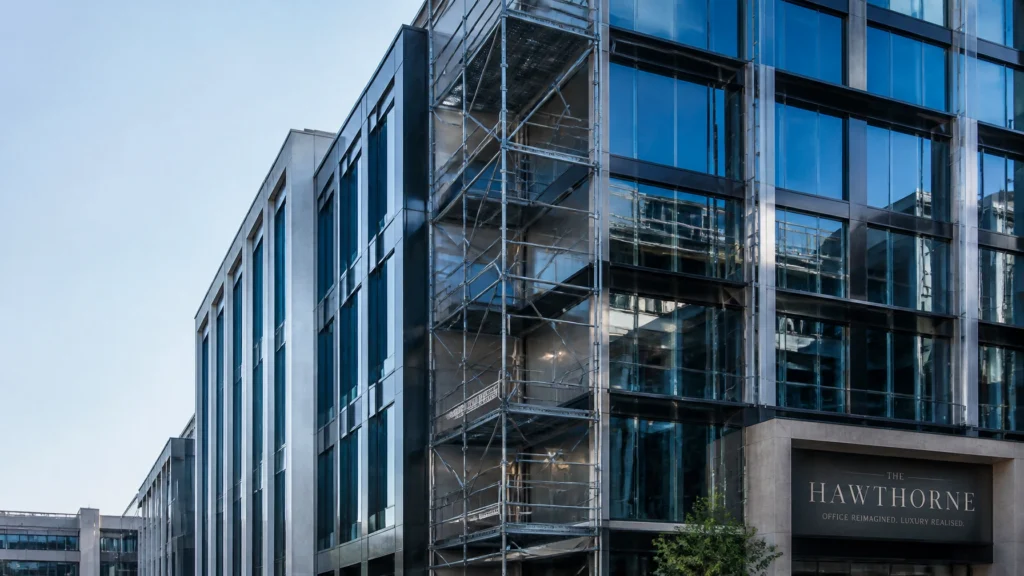
The headline "Office is Dead" has been a staple of financial news for years. You’ve seen the empty lobbies. You’ve read about the record-high vacancies in downtown cores. It’s easy to look at a 40-story glass tower and see a relic of a bygone era.
But sophisticated investors don't see a dead asset. They see a massive opportunity for repositioning.
The office market isn't dying; it's evolving. The traditional "buy and hold" office strategy is indeed struggling, but a new era of active asset management is taking its place. Today, leading investors are moving away from passive ownership and leaning heavily into real estate development consulting to execute complex office-to-residential or hospitality conversions.
It’s not just about changing the signage. It’s about building a legacy in a shifting landscape.
The Office Pivot: Why Conversions are the New Frontier
By 2026, the demand for urban residential units has reached a boiling point, while obsolete office stock remains underutilized. According to recent industry data, nearly 30% of older office stock in major North American cities is suitable for apartment conversion. We are looking at a pipeline of over 90,000 residential units nationally transitioning from office use.
It’s not just about filling space, it’s about solving a housing crisis.
When you turn a struggling Class B office building into a luxury apartment complex or a boutique hospitality venture, you aren’t just following a trend. You are creating a high-demand asset in a market that is starving for inventory. This is where property repositioning becomes your most powerful tool.
Expert guidance is the difference between a successful conversion and a capital-intensive nightmare. From zoning navigation to structural feasibility, the right consulting partner ensures your vision pencils out before the first hammer swings.
NOI Growth Matters: Why Active Management is the Only Way to Win
In the current market, you can no longer rely on cap-rate compression to grow your wealth. The "rising tide lifts all boats" era is over. Today, your success depends entirely on Net Operating Income (NOI) growth.
It’s not just about owning the asset, it’s about operating it.
Active asset management is the engine of value creation in 2026. This means finding efficiencies that others miss. It means tech-enabled property management, strategic re-tenanting, and targeted capital expenditures that justify premium rents.
We understand how complex it is to manage a multi-asset portfolio while keeping an eye on every operational detail. That is why we focus on hands-on guidance. By prioritizing operational excellence, you can drive NOI even when the broader market is stagnant.

The Senior Housing Guide: Investing in Stability
While the office pivot captures the headlines, smart capital is quietly flowing into one of the most demographically supported asset classes of the decade: Senior Housing.
As we move through 2026, occupancy levels in senior living are hitting record highs. The supply of new facilities hasn't kept pace with the aging population, creating a perfect storm for investors looking for long-term stability.
It’s not just about real estate, it’s about providing essential services.
Whether you are looking at assisted living, memory care, or independent lifestyle communities, the key is professional management. Senior housing is operationally intensive. It requires a specialist approach to staffing and care that traditional residential real estate doesn't demand.
For high-net-worth families, adding senior housing to a portfolio offers a defensive hedge. It provides a recession-resistant income stream backed by undeniable demographic shifts.

Portfolio Pitfalls: 7 Mistakes You Might Be Making
Even the most successful investors can fall into traps when their portfolios become complex. Over 10 years of experience has shown us that wealth preservation is often about what you don't do.
Are you making these common mistakes?
- Geography Concentration: Keeping all your assets in one city leaves you vulnerable to local economic shifts.
- Tax Inefficiency: Failing to use strategic depreciation or entity structuring to protect your returns.
- Passive Reliance: Thinking a "set it and forget it" approach still works in a volatile market.
- Underestimating Reserves: Not keeping enough liquidity for the "capital calls" of property repositioning.
- Chasing "Trophy" Assets: Buying buildings for the ego rather than the fundamentals.
- Ignoring the Exit: Entering a deal without a clear 5-to-10-year exit strategy.
- Siloed Planning: Managing your real estate separately from your overall estate and legacy goals.
We’re here to help you audit these risks. Real estate should be the foundation of your legacy, not a source of constant stress. By identifying these pitfalls early, you can pivot toward a more resilient strategy.
Private Credit vs. Equity: Finding the Right Balance
The capital stack in 2026 looks different than it did five years ago. Many investors are now weighing the benefits of private real estate credit against traditional equity investments.
It’s not just about owning the building, it’s about owning the debt.
Private Credit offers a predictable yield with significant downside protection. You are the lender, positioned senior to the equity. In a market where traditional banks have pulled back, private credit providers are seeing double-digit returns with less volatility.
Equity Real Estate remains the primary vehicle for long-term growth and capital appreciation. When you execute a successful real estate development project: like an office conversion: the equity upside can be transformative for your net worth.
The most sophisticated portfolios use a "barbell strategy." They hold safe, income-producing private credit on one side and high-conviction, operationally intensive equity plays on the other.

Building Your Legacy through Specialized Expertise
Real estate is more than just an asset class; it is the physical manifestation of your hard work and vision. But the complexity of today’s market: from office conversions to private credit structures: requires more than just capital. It requires a partner who understands the nuances of real estate investment management.
You deserve a personalized approach. At Rundle Asset Management, we don’t just focus on your money; we focus on building your legacy. We’ve spent over a decade helping high-net-worth families navigate these exact transitions.
Whether you are looking to pivot away from traditional office assets or you want to explore the stability of senior housing, get the right information so you can make the best decisions.
The market is moving. Are you?
Contact us today for a comprehensive consultation on your real estate portfolio strategy.
