
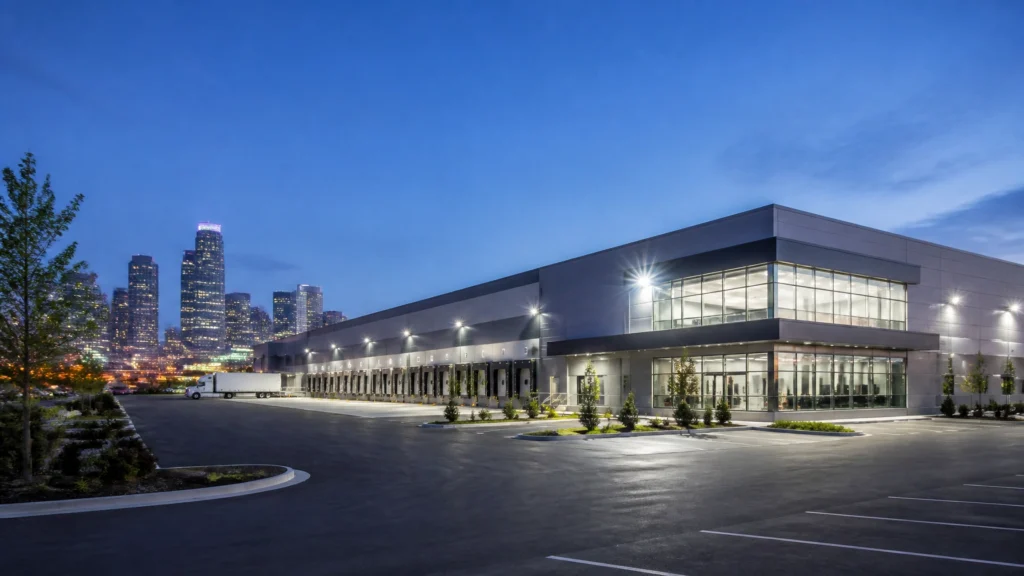
You’ve likely heard the whispers in the corridors of traditional wealth management. Some say the industrial gold rush is over. They point to the cooling of the 2021 frenzy and suggest that infill industrial has reached its ceiling.
They are wrong.
Infill industrial isn't dead. It has evolved. In 2026, we are no longer in a "momentum" market where any warehouse with a roof generates double-digit returns. We are in a scarcity market. It’s not just about owning square footage anymore; it’s about owning the right square footage in the most constrained locations.
At Rundle Asset Management, we’ve spent over 10 years helping high-net-worth individuals navigate these shifts. We understand how complex the current landscape is. You aren't just looking for a place to park cash: you are looking to build a legacy. And in the world of real estate investment management, last-mile logistics remains the undisputed king of the portfolio.
The Scarcity Premium: Why Location Is Your Greatest Asset
The traditional approach to industrial real estate often focuses on scale. Bigger is better, right? Not in 2026.
While massive distribution centers in peripheral markets are seeing rising vacancies, infill properties: those tucked into the heart of major metropolitan areas: are operating in a different reality.
- Land is vanishing. In major North American hubs, available land for industrial use is being swallowed by data centers and high-density residential projects.
- Zoning is a fortress. It is harder than ever to get new industrial projects approved near residential cores.
- Proximity is non-negotiable. For modern retailers, the cost of transportation is far higher than the cost of rent. They will pay a premium to be 10 minutes closer to your front door.
It’s not just about a building; it’s about a barrier to entry. When you invest in infill industrial, you aren't just buying real estate. You are buying a position in a supply-constrained market that cannot be replicated.

Small-Bay vs. Big-Box: The 2026 Performance Gap
We are seeing a significant divergence in the market. While large "big-box" warehouses (over 500,000 square feet) are feeling the pressure of localized oversupply, small-bay and flex industrial spaces are thriving.
Data from major firms like JLL and CBRE consistently shows that infill vacancy rates are 200 to 400 basis points lower than the broader industrial market. In markets like Denver and the Sun Belt, small-bay properties are showing the tightest fundamentals we've seen in years.
It’s not just about storage; it’s about utility. Small-bay spaces serve a diverse range of tenants: from e-commerce startups to specialized service providers. This diversity creates a resilient income stream that big-box facilities often lack.
At Rundle, we focus on current projects that leverage these high-demand, small-format assets. We believe your portfolio should be built on resilience, not just scale.
The New Competitors: Data Centers and the "Green Premium"
The landscape of infill industrial has changed because the competition for land has changed.
You aren't just competing with other warehouse developers anymore. You are competing with the infrastructure of the future. AI-driven demand for data centers is driving land prices to record highs in urban peripheries. Simultaneously, the "Green Premium": the demand for sustainable, energy-efficient logistics spaces: is reshaping how tenants choose their homes.
- Data Centers: They are outbidding traditional industrial users for prime land with heavy power access.
- Residential Encroachment: Cities are rezoning industrial land for housing to solve the affordability crisis.
- ESG Standards: Institutional tenants are now demanding LEED-certified or carbon-neutral facilities to meet their corporate mandates.
This competition further restricts the supply of functional last-mile space. If you own an asset that meets these modern requirements, you don't just have a tenant: you have a partner who is deeply invested in staying put.

It’s Not Just About Money; It’s About Your Legacy
Traditional asset managers often treat real estate as a line item on a spreadsheet. They look at cap rates and exit multiples, but they often miss the human element.
We do things differently. We know that for our clients, these investments represent years of hard work and a desire to provide for future generations.
Our personalized approach means we don't just find a property; we find a strategy that fits your specific financial situation. We provide the expert guidance you need so you can make informed decisions without the stress of day-to-day management.
- We identify the "hidden" infill gems that larger institutional funds often overlook.
- We handle the complexity of repositioning older assets into modern last-mile hubs.
- We focus on long-term wealth preservation rather than short-term speculative gains.
How to Navigate the Last-Mile Landscape in 2026
If you are looking to strengthen your real estate portfolio, the path forward requires more than just capital. It requires a disciplined, surgical approach to market selection.
- Prioritize Density Over Discount: A cheaper building in a remote area is often a liability. Focus on high-income, high-density urban nodes.
- Underwrite for Scarcity: Don't bet on massive rent spikes every year. Instead, bet on the fact that your tenant has nowhere else to go.
- Focus on Functionality: Ensure your assets have the truck circulation, ceiling heights, and power capacity that 2026 tenants demand.
- Partner with Experts: Last-mile logistics is operationally intensive. You need a team that understands local zoning, tenant needs, and asset repositioning.
We’re here to help you get the right information so you can make the best decisions for your family’s future.

The Rundle Advantage: Personalized Guidance for High-Net-Worth Investors
For over a decade, Rundle Asset Management has served as a guide for families across North America. We’ve seen cycles come and go, but the fundamental value of well-located real estate never changes.
It’s not just about wealth management; it’s about wealth mastery.
Whether you are looking to diversify your existing holdings or you are just beginning to explore the world of real estate asset management, our team is ready to provide the specialized expertise you deserve. We invite you to learn more about us and how we can help you build your legacy through strategic industrial investments.
Conclusion: The King Still Reigns
Infill industrial and last-mile logistics are far from dead. They are the bedrock of a sophisticated 2026 real estate strategy. While the "easy money" of the early 2020s has vanished, the structural demand for urban-adjacent space is stronger than ever.
The opportunity for high-net-worth investors lies in moving past the "traditional" advice and embracing a scarcity-driven model.
Are you ready to take the next step in securing your real estate legacy?
Contact us today to start a conversation about your personalized investment strategy.
