
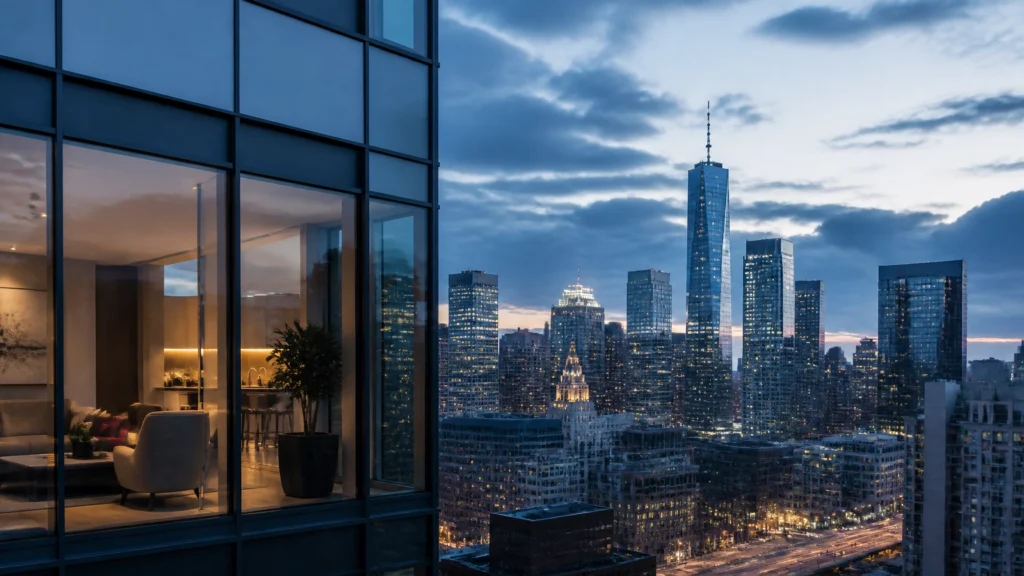
The headlines would have you believe the era of the office is over.
You’ve seen the reports of record vacancies, "zombie buildings" in city centers, and delinquency rates climbing to historic highs. By mid-2026, office CMBS delinquency has touched nearly 12%, a level that surpasses even the darkest days of the Global Financial Crisis.
It's easy to look at those numbers and see a sector in terminal decline.
But for the sophisticated investor, the reality is far more nuanced. Office real estate isn't dying; it’s experiencing a Great Bifurcation. While older, "commodity" office buildings are struggling, prime trophy assets are reaching all-time high rents in cities like New York and Miami.
The gap between these two worlds has created a unique opportunity for those with the vision to look beyond the status quo.
It’s not just about square footage anymore. It’s about adaptability.
At Rundle Asset Management, we’ve spent over a decade helping high-net-worth families navigate these complexities. We know that the buildings others are writing off are often the raw materials for tomorrow’s most valuable assets.
The secret? Real estate development consulting focused on strategic conversions.
The Great Bifurcation: Understanding the 2026 Landscape
The current market has created two very different stories for office real estate.
On one side, you have "Flight to Quality." Modern, amenitized, and transit-accessible buildings are thriving. Major users are returning to the market, and in some sectors, prime space is actually becoming scarce.
On the other side, you have millions of square feet of older, functionally obsolete inventory. These are the buildings driving the distress headlines. According to PwC and ULI, urban office prices for these assets have dropped as much as 50% from their peaks.
This is where the opportunity lies.
When an asset's value resets by half, the math for a conversion: turning that office block into luxury apartments or a mixed-use community: suddenly starts to make sense.
It’s not just about saving a building. It’s about building a legacy.

Why Office-to-Residential (OTR) is the New Gold Rush
Leading investors are no longer asking if they should convert; they are asking how.
By 2026, office-to-residential (OTR) conversions have moved from a niche experiment to a formal investment theme. There are three primary drivers behind this shift:
- The Supply/Demand Mismatch: North America is facing a chronic housing shortage. While we have too much office space, we have nowhere near enough high-quality residential units in urban cores.
- Municipal Incentives: Cities like Chicago and Calgary have led the way with aggressive grant programs and tax breaks to encourage developers to revitalize their downtowns. Policy-backed adaptive reuse is now a central pillar of urban planning.
- A Lower Entry Point: With distressed sales on the rise, investors can acquire the "shell" of a building at a price that leaves ample room for a comprehensive repositioning budget.
However, seeing the opportunity and executing it are two very different things.
The Complexity Trap: Why You Need a Guide
We understand how complex it is to look at a 20-story vacancy and see a thriving residential community.
Conversion projects are notoriously difficult. It’s not a simple "flip." There are physical, financial, and regulatory hurdles that can sink a project if they aren't managed with extreme precision.
Physical Feasibility
Many office buildings aren't naturally suited for living. They have deep floor plates that make it hard to get natural light into every unit. Elevators and core plumbing are often in the wrong places for residential layouts.
Zoning and Regulatory Risk
Changing the use of a building from commercial to residential requires a deep understanding of local building codes, life-safety requirements, and zoning laws. One wrong assumption can lead to years of delays.
The Financial Pro Forma
High construction costs and complex financing structures mean that these projects require sophisticated modeling. You need to know exactly how much "economic aid" or incentive is required to make the risk-adjusted returns work.
This is why leading investors are turning to comprehensive consultation services. You need a partner who has been in the trenches for 10+ years, someone who understands both the bricks-and-mortar reality and the long-term wealth strategy.

Repositioning: It's Not Just About Survival
It’s not just about surviving a downturn; it’s about mastering the market.
At Rundle Asset Management, we believe that every asset has a "highest and best use," and in 2026, that use is often a radical departure from the original intent.
Our property repositioning services are designed to help you unlock value where others only see a liability. We don't just focus on the immediate cash flow; we focus on the multi-generational impact of your portfolio.
Whether it's converting a secondary office building into a boutique hotel, high-end residential lofts, or a specialized life-science hub, the goal is the same: to create a resilient asset that stands the test of time.
The Rundle Approach to Development Consulting
When you work with us, you aren’t just hiring a consultant. You are gaining a strategic partner.
We take a personalized approach to asset management. We understand that your financial situation is unique, and your real estate investments should reflect your long-term goals.
Our development consulting process includes:
- Feasibility Analysis: We dig into the physical and financial DNA of the asset to determine if a conversion is truly viable.
- Strategic Repositioning: We identify the "gap" in the local market: what does the neighborhood actually need?
- Execution Oversight: From navigating municipal incentives to managing the development team, we provide expert guidance every step of the way.
We’re here to help you get the right information so you can make the best decisions for your family’s wealth.

Is Your Portfolio Ready for the Future?
The world has changed, and the "traditional" ways of managing real estate assets are no longer enough.
The most successful investors in the next decade won't be the ones who played it safe. They will be the ones who saw the value hidden in plain sight. They will be the ones who turned a 12% vacancy rate into a 100% occupied residential landmark.
If you are holding office assets that are no longer performing, or if you are looking to capitalize on the current wave of distressed opportunities, let's talk.
At Rundle Asset Management, we’ve been serving clients throughout North America for over 10 years. We offer an alternative to traditional managers with our specialized expertise and hands-on approach.
Building a legacy starts with a single decision. Make it an informed one.
Contact us today to learn how our real estate development consulting can help you navigate the new reality of the office market.